The True Cost of Cabling in Commercial Fire Alarm Installations
For years, fire alarm installation has followed a familiar formula: design the system, run the cable, contain it, test it, and hand it over.
But today, that model is under increasing pressure.
Across the industry, many installers and project teams are reporting sharp increases in cabling costs, alongside growing challenges in labour, access, and programme delivery. When cable becomes more expensive and harder to resource, it stops being a simple material line. It becomes a project risk.
In this market, the question is no longer whether wireless fire alarms work.
It is whether traditional cabling still makes commercial sense.
Cabling Is Becoming a Bigger Part of the Installation Burden
The true cost of a wired system is rarely just the cable itself. It is everything that comes with it:
- Containment and routing
- Labour hours and specialist trades
- Access constraints in live or occupied environments
- Disruption during retrofit projects
- Delays caused by material availability
- Rework when layouts change
As these pressures grow, wired infrastructure is becoming one of the biggest variables in project complexity, cost control, and programme certainty.
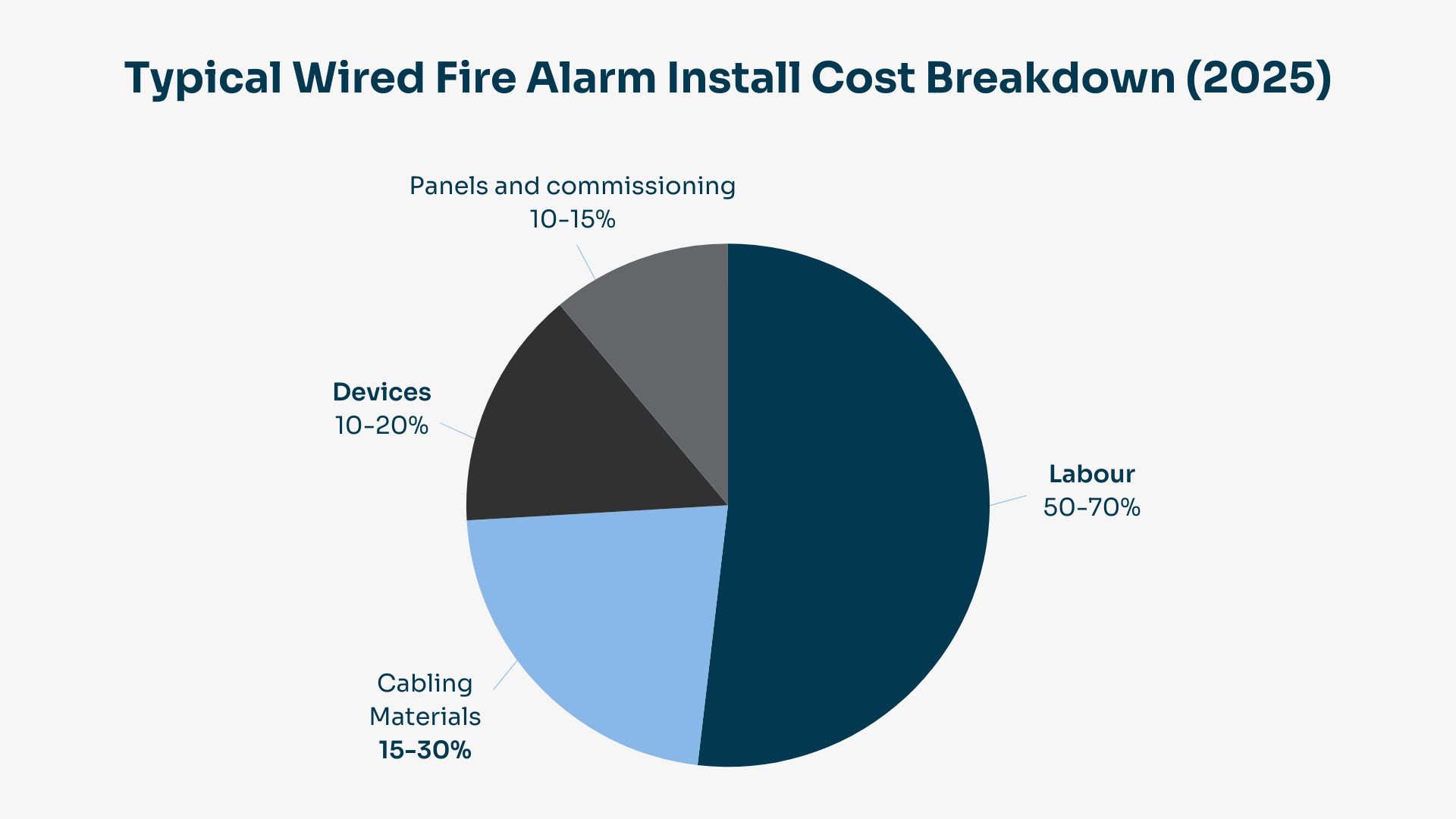
Based on UK industry installation cost norms and contractor estimates. Figures represent typical wired fire alarm installation cost distribution.
Wireless Is No Longer the Compromise Option
Wireless fire detection was once viewed as a niche alternative. Suitable for certain sites, but not always trusted at scale.
That has changed.
Cygnus has been purpose-built to operate reliably across large, complex and fast-moving environments, delivering the speed and flexibility of wireless without the dependency on miles of cabling.
True Wireless Changes the Economics of Installation
This is where Cygnus stands apart.
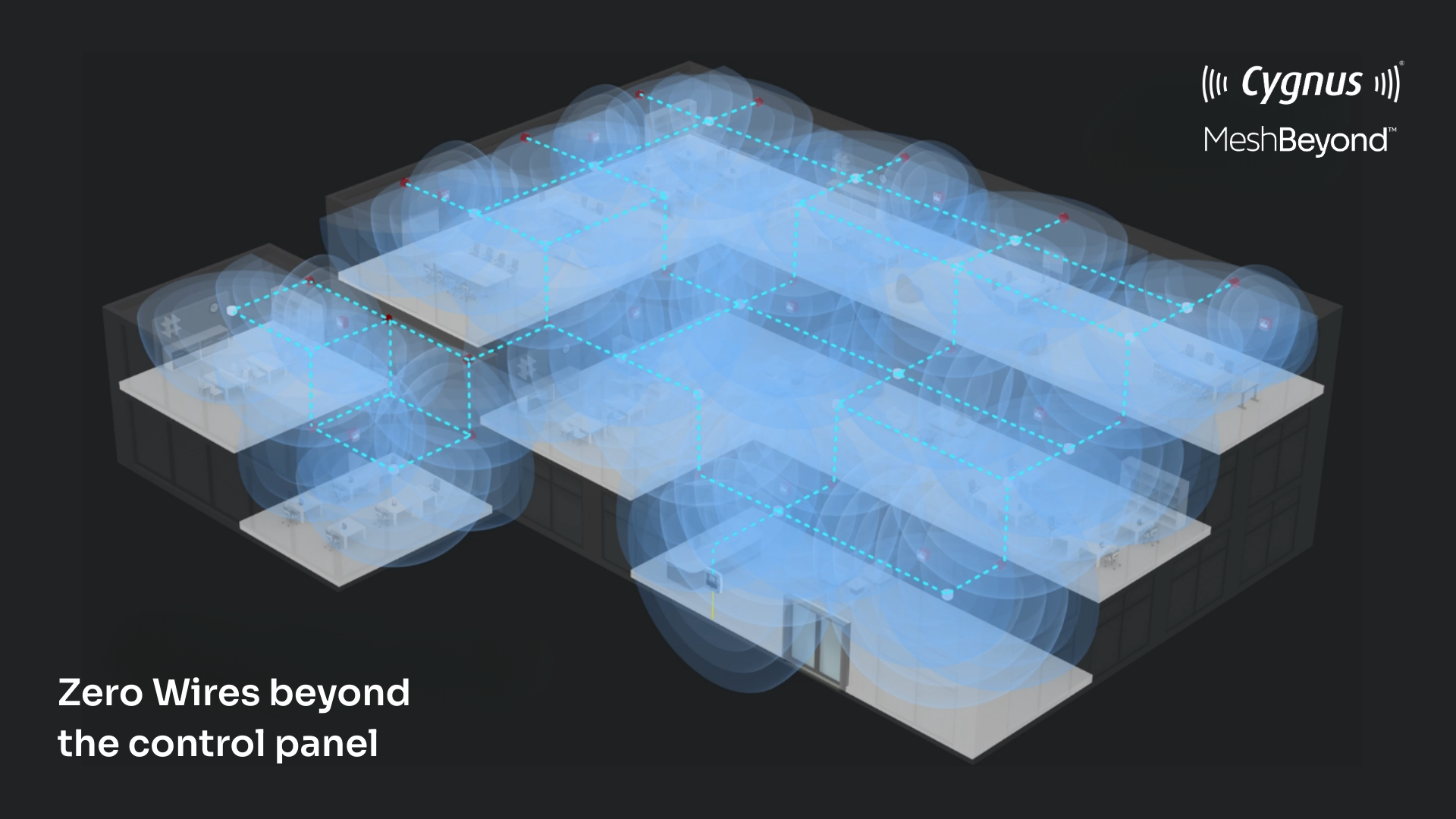
Cygnus is built around the principle of true wireless, meaning there are zero wires beyond the control panel.
That single difference has a major impact on installation delivery:
- No cable runs across changing site layouts
- No containment challenges in difficult spaces
- Faster deployment with fewer trades involved
- Easier retrofits in occupied or sensitive buildings
- Greater certainty in labour and programme
Learn more about Cygnus true wireless technology.
Cygnus also states that its systems can be installed up to 20 times faster than wired alternatives, helping installers deliver projects more efficiently.
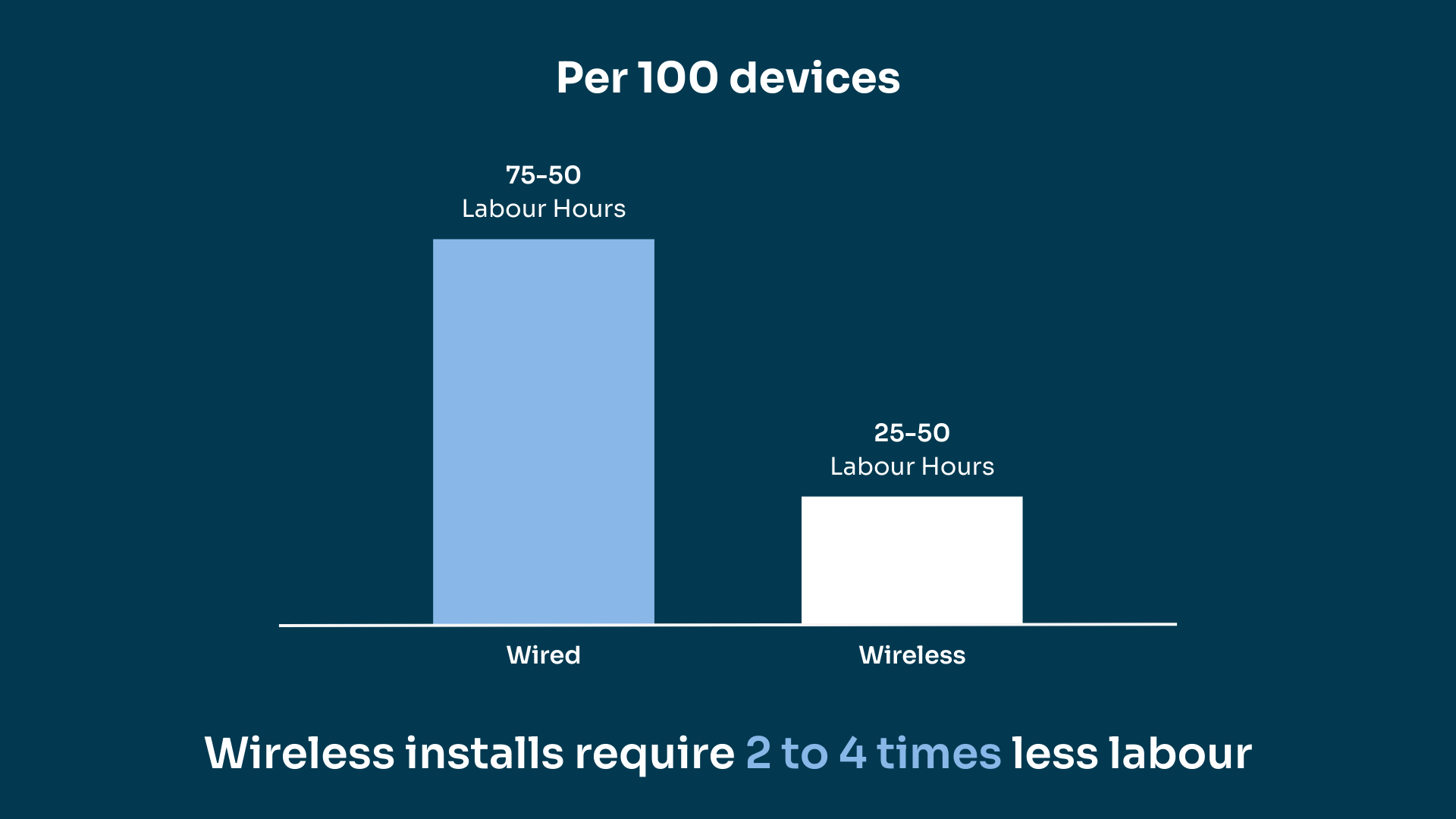
Labour hour comparisons based on typical UK commercial installation time ranges for wired vs wireless fire alarm systems.
Built for Scale, Not Just Convenience
True wireless only becomes a genuine alternative when it can operate at the same scale as wired systems, which is exactly what Cygnus is designed to deliver.
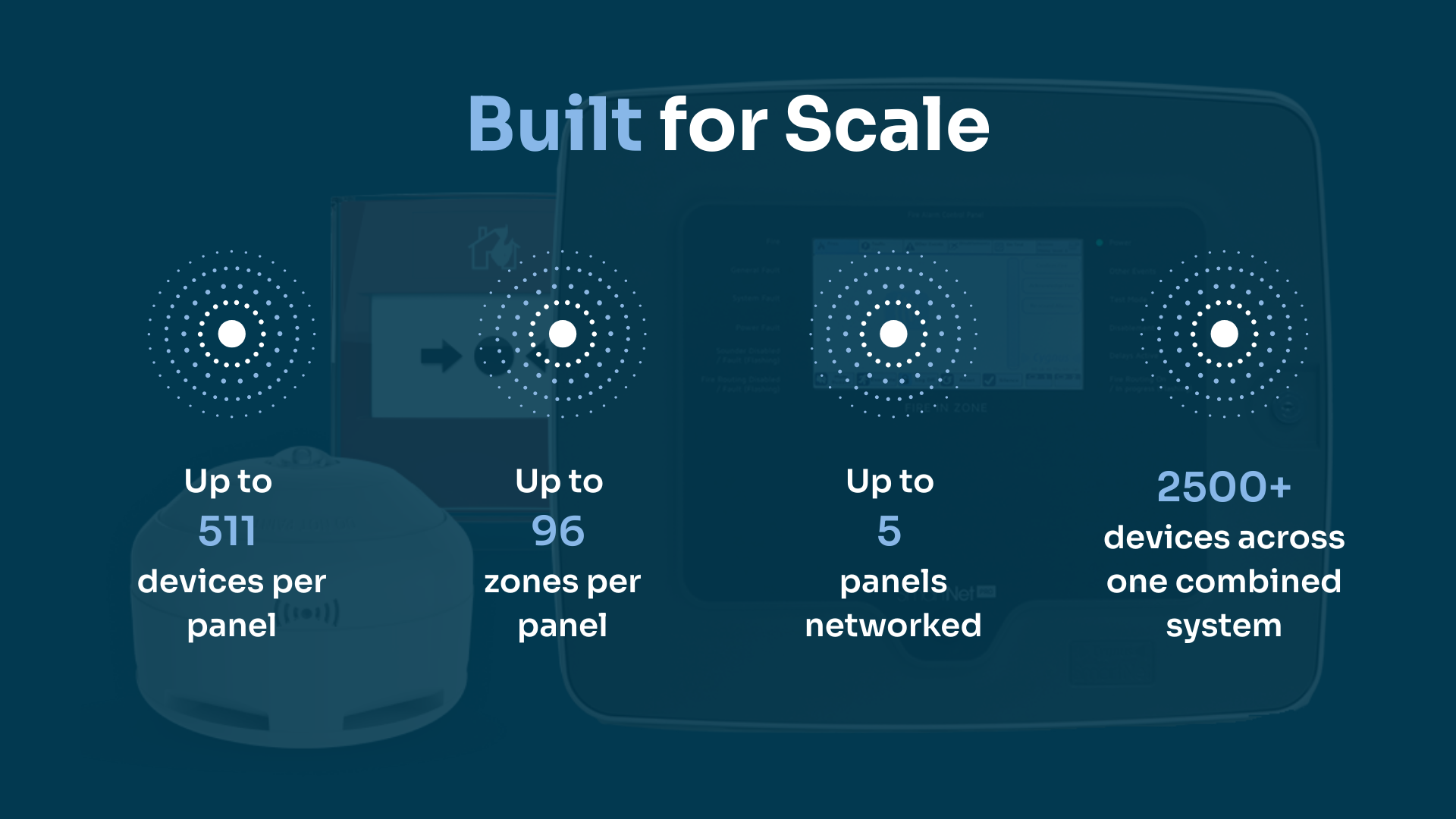
Cygnus is designed for that reality, supporting:
- Up to 511 devices per panel
- Up to 96 zones per panel
- Up to five panels networked together
- Over 2,500 devices across one combined solution
This makes Cygnus suitable suitable for large, complex and occupied buildings where cabling is disruptive or impractical.
Reliable Communication Through Wireless Mesh
Performance at scale depends on reliability.
Cygnus operates on a self-forming, self-healing wireless mesh network, ensuring devices maintain communication across systems of all sizes.
Read more about the Cygnus mesh approach.
Practical Tools and Resources for Installers
Technology is only part of the equation. Installers also need practical tools, guidance, and support to deliver projects smoothly.
Cygnus systems are supplied through a bespoke training programme. Installers must complete Cygnus training before purchasing and installing the solution, ensuring correct design, commissioning and long-term performance.
Cygnus also provides a growing library of resources, including installation and maintenance tools, How To videos, and technical guidance, designed to help installers work faster and with greater confidence.
The Bottom Line: When Costs Rise, Simplicity Wins
As cabling costs continue to fluctuate and installation pressures increase, the fire safety industry is entering a new phase.
The most competitive projects will be those that reduce complexity, remove unnecessary infrastructure, and deliver compliance with greater speed and certainty.
True wireless is not just an innovation.
It is a smarter commercial decision.
Cygnus is helping installers build faster, cleaner and more scalable fire alarm systems, without the cable burden.