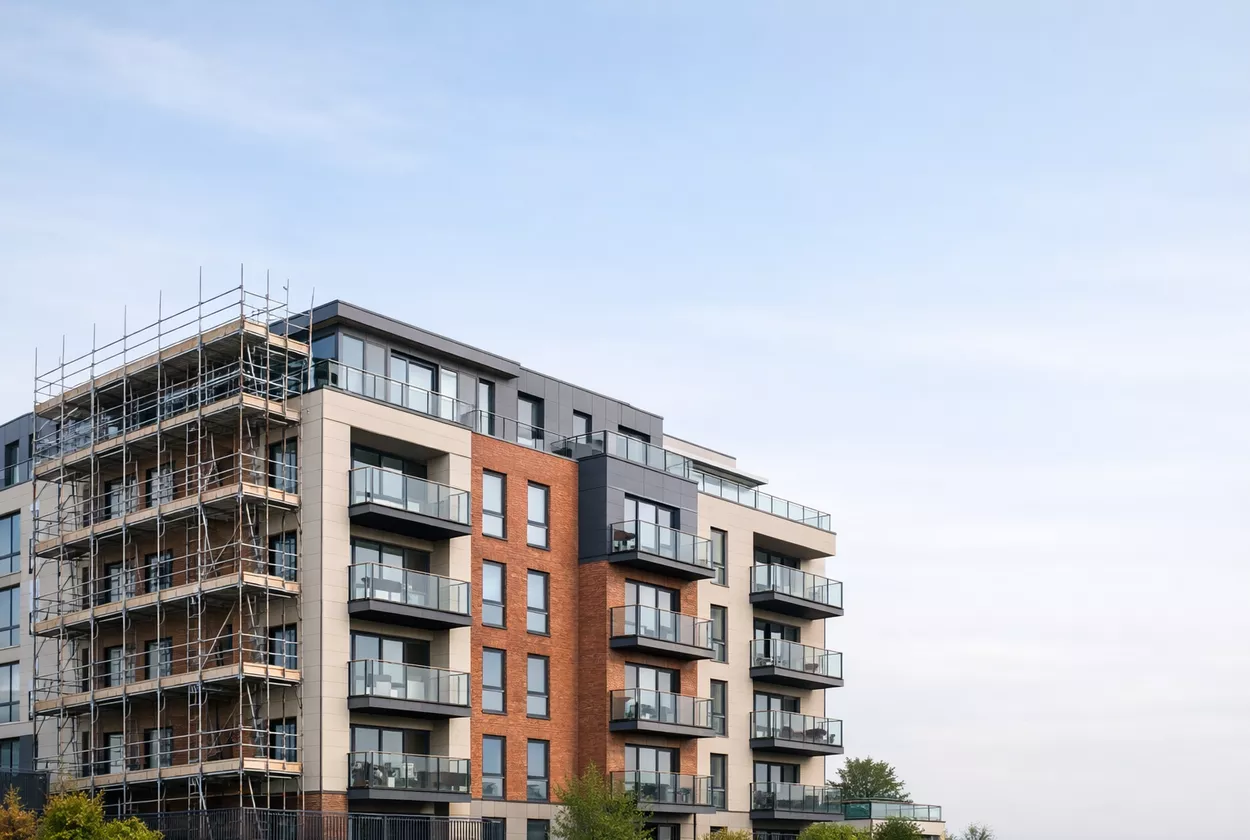
In January 2026, the Building Safety Regulator (BSR) confirmed it would begin turning its attention towards the growing backlog of fire safety remediation applications for higher-risk buildings (HRBs). While this signals progress, the reality remains challenging: Gateway Two applications that were originally expected to be determined within eight weeks are now taking an average of 30 weeks, with some remediation cases remaining unresolved for 12 months or more.
For fire safety and facilities managers, these prolonged delays are not abstract regulatory issues - they translate directly into escalating costs, operational strain and ongoing risk management responsibilities. Most critically, they affect thousands of people who continue to live in buildings awaiting remediation, often under interim measures such as waking watch patrols that were never intended to be long-term solutions.
Stephen Marsh, Head of Technical Operations at Cygnus Systems, the UK leader in wireless fire alarm systems, explores how wireless fire detection can play a vital role during this period of regulatory uncertainty. He examines how compliant, fully certified wireless fire alarm systems enable responsible persons to enhance resident safety immediately, reduce reliance on waking watch and control costs - all while remediation projects remain in the BSR system.
When eight weeks becomes eight months
When the Building Safety Regulator (BSR) confirmed in January 2026 that it would focus on the growing backlog of higher-risk building (HRB) remediation applications, it was widely welcomed as a necessary shift in focus.
For many responsible persons, however, this simply formalised what they had been managing for months: hundreds of HRBs, housing many thousands of residents, remaining in prolonged regulatory limbo.
Upon inception of the BSR in October 2023, Gateway Two applications were originally expected to be determined within eight weeks. The reality however is much more drawn-out. These applications are now averaging around 30 weeks, longer in London, with some cases unresolved for over a year.
According to data from the London Fire Brigade, over 1,000 buildings in the capital need a waking watch in place due to fire safety issues. This is just data for London; the statistics for the whole of the UK would paint a much more alarming picture.
The truth behind the statistics
Behind those statistics lies a more complex operational reality.
Property managers’ roles have spiralled to balance legal obligations, resident wellbeing, operational complexity and escalating costs, all while feeling the pressure of ensuring remediation happens, and quickly.
With the government’s ambitious Remediation Acceleration Plan (RAP) setting a deadline of June 2029 for all cladding remediation, facilities managers and the BSR face intense pressure to get applications approved. Responsible persons must also demonstrate proactive risk management under increasing scrutiny from media, local authorities and residents.
Meanwhile, buildings must continue to function safely, occupants should feel protected and interim measures, often introduced at pace in response to fire safety concerns, have in many cases become extended arrangements, straining budgets, resources and patience in equal measure.
The cost of waiting
Many HRBs with potential fire safety issues are moved from a Stay Put fire strategy to Simultaneous Evacuation. With this, the need for reliable, long-term fire protection has never been greater.
Waking watch patrols have become a common interim solution. This fire safety measure sees trained staff conduct continuous internal and external patrols of a building, 24 hours a day. Their role is to detect early signs of fire, alert occupants and ensure everyone can evacuate safely.
Waking watch is typically introduced when dangerous cladding is present, fire safety issues require a change from a Stay Put strategy, or a temporary simultaneous evacuation approach is needed.
They were never designed to fulfil a long-term solution.
It is now the reliance on these patrols that is perhaps the most tangible impact of delayed remediation on the bottom line for facilities management teams.
What began as a precautionary measure after the Grenfell Tower tragedy in 2017 has, over the last five years, become a widespread operational reality across high-rise residential buildings in England.
With that reliance, the cost escalation has been dramatic too. Early post-Grenfell arrangements were typically £3,000 to £5,000 per building per month. By 2020, as more blocks were assessed and more interim measures were needed, median monthly costs had risen to around £11,361 per building. As a benchmark, it’s around £137 per dwelling per month. You can also reference the government overview here: waking watch costs (GOV.UK) .
Recent projects that Cygnus has been contracted to are spending up to £60,000 per week on their waking watch patrols, a figure which is simply unsustainable, and unnecessary with other reliable and compliant options out there.
Beyond the financial impact, waking watch patrols can place additional operational strain on building managers, who must coordinate 24/7 staffing, adhere to regulatory guidance, ensure sufficient welfare facilities for an influx of extra personnel and maintain robust records. They can also delay the adoption of more reliable, permanent fire safety solutions.
The human cost should not be forgotten either: residents continue to live with uncertainty in buildings awaiting remediation works and the addition of financial ambiguity only heightens this anxiety.
An effective successor to waking watch
According to Simultaneous Evacuation Guidance (SEG - 4th Edition) , where a waking watch is implemented, the responsible persons should make a plan for implementing sustainable means to allow the building to transition away from a waking watch. Within six months, this transition should be implemented.
While prioritising and fast-tracking remediation should of course be the key focus, early installation of a wireless fire alarm system is often the most achievable and realistic route to reducing risk quickly, restoring resident confidence and cutting unnecessary costs.
Failure to comply with SEG risks regulatory attention and reputational damage, a reality that cannot be ignored while remediation applications sit in the BSR system for months at a time.
Recognising these ongoing challenges, the government had extended its Waking Watch Replacement Fund 2023 with an additional £21.11 million to help building owners and managers replace costly, temporary waking watch patrols with permanent alarm systems. However, this is now only available until 31 March 2026.
Despite the funding coming to an end however, facilities managers should not be put off the idea of a more suitable alternative to waking watch, in line with SEG guidance. The cost to install wireless fire detection systems within an HRB is still dwarfed by the sheer costs of waking watch, and so long-term both stakeholders and residents will see the benefit.
Beyond the ‘temporary’ label
Waking watches have served a purpose and are a crucial cog in the wheel of fire safety. Their role in keeping residents safe should not be underestimated.
However, there are more sustainable and reliable options available which enable duty holders to transition easily into a more long-term solution. Ultimately an individual human cannot look everywhere, at all times, to identify signs of fire.
In this landscape, fire safety technology is becoming a strategic tool which forms part of the bigger picture of remediation. Modern wireless fire alarm systems offer a compliant, flexible and immediately deployable alternative to prolonged reliance on waking watch.
Despite lingering misconceptions that wireless systems are temporary or unreliable, today’s solutions are fully certified, standards-compliant and robust enough for long-term deployment. They can be installed rapidly in occupied buildings, minimising disruption while providing residents with continuous protection.
For responsible persons, this means the ability to stand down waking watch more quickly, reduce operational costs and maintain demonstrable compliance, all while being able to focus attention and priorities on the only fully permanent solution: full and thorough remediation.
This approach addresses multiple pressures simultaneously: it safeguards occupants, mitigates operational risk for facilities managers and signals to regulators and stakeholders that the duty holder is actively managing fire safety rather than merely maintaining a holding pattern.
In a period defined by regulatory uncertainty, these systems allow building managers to act decisively and responsibly, even while the broader remediation landscape catches up.
From interim measure to long-term resilience
For those seeking a future-proofed fire safety solution, Cygnus offers a world-first, fully EN 54 certified fire detection and alarm system with zero wires beyond the panel.
The wireless system simplifies installation and commissioning with minimal disruption to buildings and its occupants and can be up to 20 times faster to install than wired systems.
As well as rapid installation, the patented MeshBeyond™ wireless technology guarantees comprehensive coverage, and the detectors combine this capability with the latest smoke and heat sensing technology to provide accurate detection while reducing the risk of false alarms.
While most wireless fire safety systems claim to use “mesh networking”, few truly offer the same genuine, dynamic, safety-critical mesh. Cygnus stands apart, using patented technology specifically designed for complex, multi-storey buildings. What’s more, its major advantage and true USP over its wired counterparts is, of course, its ability to preserve a building’s integrity, a non-negotiable for avoiding ongoing lengthy BSR approvals.
This makes Cygnus the most robust wireless mesh platform available, ideal for duty holders to manage waking watch replacement and SEG-compliant transitional protection.
Once remediation is completed, Cygnus systems can continue to operate as an ongoing alarm system and be integrated into a building’s fire strategy. Alternatively, it can be removed as smoothly as it was installed, leaving no damage or further work to the fabric of the building.
An ever-changing regulatory landscape
The fire safety remediation landscape is far from settling down, with the last few months having already seen significant, albeit welcomed, changes coming out of the BSR; and there’s still more to come.
Hot on the tails of the announcement that it has become a standalone organisation, aiming to sharpen accountability, speed up decision-making and strengthen its focus on remediation, it remains to be seen whether the backlog refills as quickly as it is cleared. See: GOV.UK announcement (27 January 2026) .
With the upcoming Remediation Bill expected to put a ‘legal duty to remediate’ onto duty holders, those responsible for HRBs won’t simply sit back and wait for the BSR to catch up.
In years to come, the overall result of these current remediation projects will be net positive, and all high-rise buildings in the UK will be made safe. However, as more and more buildings are investigated and assessed, further flaws in building structure and integrity are being exposed.
With this, the timescales for remediation are still truly unknown. That’s why a long-term, compliant and sustainable solution to resident safety is so vital, while navigating this ongoing regulatory limbo.
Find out more about Cygnus and how it can support you to stand down waking watch.